
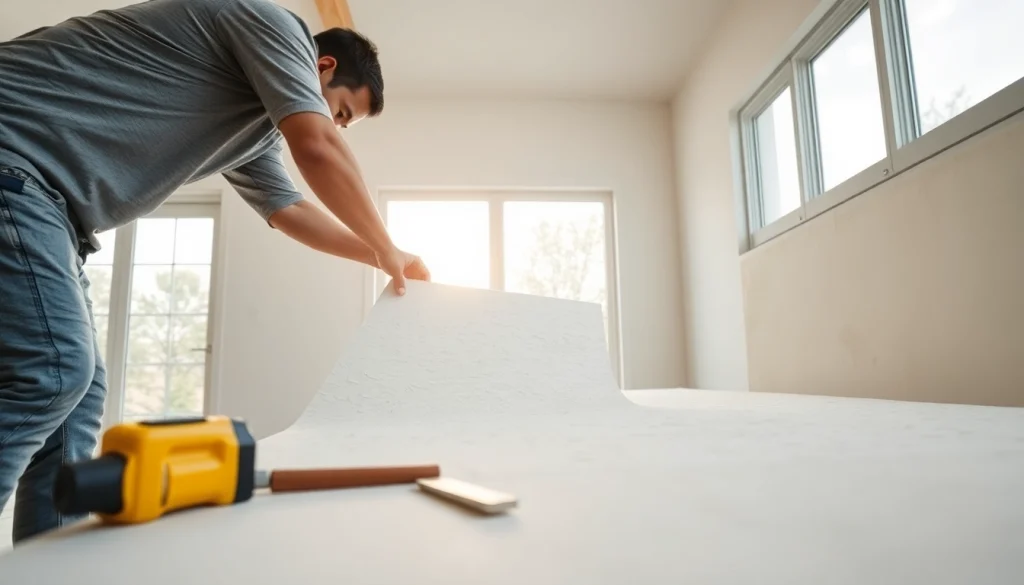
Understanding the Basics of Drywall
When embarking on any home improvement project, it’s crucial to understand the materials involved. One such material that plays a pivotal role in modern construction is drywall. It serves as a primary interior wall surface and features numerous benefits, making it a favorite among builders and homeowners alike. This article will delve deep into the various aspects of drywall, offering insights, installation techniques, and maintenance tips to ensure a flawless finish in your home. Whether you’re a DIY enthusiast or a seasoned professional, understanding drywall is essential for achieving a polished look in your spaces.
What is Drywall?
Drywall, also known as gypsum board, wallboard, or plasterboard, is a panel made from gypsum plaster sandwiched between two thick sheets of paper. It is primarily used for interior walls and ceilings. The material provides a tough surface that can be painted or finished and is designed for easy installation, which reduces labor time compared to traditional plaster. Its popularity is largely due to its affordability, fire resistance, and soundproofing properties, making it an attractive option for residential and commercial properties alike.
Types of Drywall and Their Uses
There are several types of drywall catering to various needs and environments:
- Standard Drywall: The most commonly used type, ideal for most interior applications.
- Moisture-Resistant Drywall: Often referred to as green board, it is designed for high-moisture areas like bathrooms and kitchens.
- Fire-Resistant Drywall: Typically referred to as Type X, this is used in areas requiring fire-rated assemblies, such as garages or between units in apartments.
- Soundproof Drywall: This specialized drywall features enhanced sound-dampening qualities, perfect for studios or shared living spaces.
- Flexible Drywall: Designed to curve around arches or create rounded designs, it is lighter and more adaptable than standard drywall.
Key Benefits of Using Drywall
Drywall delivers numerous advantages for both builders and homeowners, including:
- Speed of Installation: Drywall can be installed quickly, significantly reducing construction time.
- Cost-Effectiveness: It is relatively inexpensive compared to plaster and other wall materials.
- Ease of Finishing: With simple sanding and taping, drywall can achieve a smooth finish perfect for painting.
- Fire Resistance: Many drywall types offer fire-resistant properties, improving safety in residential and commercial spaces.
- Versatility: It can suit a wide range of design styles and can easily accommodate electrical installations or plumbing.
Preparation for Drywall Installation
Before diving into the installation process, adequate preparation is necessary to ensure a smooth and successful drywall application. This includes gathering the right tools, prepping the work area, and organizing necessary materials.
Tools Required for Drywall Work
To guarantee an efficient installation, you will need the following tools:
- Drywall Saw: For cutting sheets to size.
- Utility Knife: Ideal for making precise cuts along drywall edges.
- Drill and Drywall Screws: For fastening drywall to studs.
- Tape Measure: Essential for accurate measurements.
- Stud Finder: Helps locate wall studs behind existing wall surfaces.
- Joint Compound and Taping Knife: Used for finishing joints between drywall sheets.
Preparing the Work Area
A clean and organized workspace can significantly impact the efficiency of your project. Begin by:
- Clearing the area of furniture and debris.
- Ensuring adequate lighting for visibility.
- Checking for any potential hazards, such as exposed wires or plumbing.
- Identifying support structures on which to mount your drywall.
Gathering Necessary Materials
In addition to tools, ensure you have the following materials ready:
- Drywall sheets in the required size and type.
- Joint tape (paper or fiberglass).
- Joint compound for finishing.
- Drywall anchors if necessary for securing to walls.
Step-by-Step Drywall Installation Guide
Now that you’ve done your preparation, it’s time to move on to the actual installation of drywall sheets.
Cutting and Hanging Drywall Sheets
Follow these steps to cut and hang drywall efficiently:
- Measure the area where the drywall will go and transfer those measurements to the drywall sheet.
- Use a utility knife to score the front side of the drywall, then snap it along the scored line.
- Hang the drywall sheets horizontally for best structural soundness, securing them to the studs using screws, approximately 16 inches apart.
- Ensure that the edges of the sheets line up with the center of the studs for optimal support.
Applying Joint Compound and Taping
The next step involves finishing the joints to create a seamless appearance. Here’s how:
- Apply a thin layer of joint compound over the seams with a taping knife.
- Immediately place joint tape over the wet compound, pressing it into place.
- Cover the tape with more joint compound, feathering the edges to blend with the drywall surface.
- Let it dry completely before applying additional coats if necessary.
Finishing Techniques for a Smooth Surface
After the joint compound has dried, you’ll want to achieve a flawless surface:
- Use a sanding block or pole sander with 120-grit sandpaper to smooth out any imperfections.
- Wipe down the area with a damp cloth to remove dust before painting.
- Consider using a primer before painting to improve paint adhesion and finish quality.
Common Challenges in Drywall Installation
Despite proper techniques, challenges may arise during drywall installation. Here are common issues along with their solutions:
Identifying and Fixing Cracks
Cracks can develop over time due to settling or environmental stress. To fix them:
- Use a utility knife to widen the crack slightly.
- Apply joint compound and tape over the crack. Ensure it’s feathered out to blend seamlessly into the surrounding area.
- Smooth it out with a sanding block after it dries.
Dealing with Humidity Effects
High humidity can cause drywall to sag and warp. To combat this:
- Use moisture-resistant drywall in areas prone to high humidity.
- Maintain proper ventilation within rooms to manage moisture levels effectively.
Handling Corner and Edge Issues
Corners and edges can be tricky. To ensure clean lines:
- Use corner bead for external corners to protect and create clean edges.
- For internal corners, angle the knife appropriately when applying joint compound for a smooth transition.
Maintaining Your Drywall After Installation
Once your drywall is installed and finished, proper maintenance is key to preserving its integrity and appearance.
Tips for Long-Lasting Drywall
To ensure your drywall remains in good condition:
- Regularly inspect for cracks and moisture issues.
- Immediately address any leaks or water damage.
- Keep humidity levels stable in affected areas.
Regular Maintenance Checklist
Consider the following maintenance checklist as part of your routine:
- Inspect for signs of mold or decay.
- Check for any changes in wall integrity.
- Maintain a consistent indoor climate, avoiding drastic temperatures and humidity.
Repairing Damaged Drywall
If you encounter damage, here’s how you can repair it effectively:
- Identify the extent of the damage. For small holes, a patch can often suffice.
- For larger sections, cut out the damaged drywall and replace it with a new piece, using joint compound to finish.
- Sand and paint over the repaired area to restore uniformity with the surrounding wall.
Frequently Asked Questions
What is the best type of drywall for bathrooms?
Moisture-resistant drywall, often known as green board, is best for bathrooms due to its ability to withstand humid conditions.
How do I know if I need to replace drywall?
Look for signs of water damage, extensive cracking, or mold growth. Warping or sagging also indicates it’s time for a replacement.
Can you paint drywall directly?
While you can paint drywall directly, it’s recommended to apply a primer first for better adhesion and a uniform finish.
What tools do I need for hanging drywall?
You will need a drywall saw, utility knife, drill, tape measure, and a stud finder for hanging drywall correctly.
Is drywall fireproof?
Standard drywall is not fireproof but offers some resistance. Type X drywall is specifically designed for enhanced fire resistance.